Geopolitical analysis today centers on a few tight, interlocking themes: fragmented supply chains, strategic technology competition, energy and food security, and the security implications of climate change.
These dynamics are reshaping alliances, trade flows, and corporate risk strategies, with implications for investors, policymakers, and supply-chain managers.
Fragmented supply chains and strategic resilience
Global trade is no longer optimized solely for cost. Companies and governments are increasingly designing supply chains for resilience.
Nearshoring, supplier diversification, and inventory buffers are common responses to disruption risk. Geopolitical analysis focuses on chokepoints — ports, semiconductor fabrication sites, rare-earth processing hubs — and how state policies, export controls, or local unrest could interrupt critical flows.
Businesses should map single points of failure, stress-test procurement scenarios, and build flexible contracts that enable rapid supplier substitution.
Technology competition as a geopolitical tool
Advanced technologies—semiconductors, AI-enabled systems, quantum computing, and secure telecommunications—are central to economic and military power.
Export controls, investment screening, and domestic industrial policy are instruments states use to preserve technological advantages or slow rivals. For private-sector actors, geopolitical analysis means evaluating technology dependencies (for example, reliance on a small number of foundries or cloud providers), understanding compliance risks around sanctions and controls, and aligning R&D strategies with changing regulatory environments.
Energy, food, and economic security
Energy transition and resource competition create both opportunities and tensions. Diversifying energy sources reduces vulnerability to supply disruptions, but the materials and infrastructure needed for renewables introduce new dependencies. Food security is increasingly linked to climate-driven extremes and trade disruptions; countries that rely heavily on imports are vulnerable to export controls and price shocks.
Strategic stockpiles, diversified sourcing, and diplomatic engagement on open trade routes remain essential risk mitigants.
Maritime zones, logistics chokepoints, and gray-zone conflict
Control of sea lanes and chokepoints has gained renewed attention. Maritime disputes, freedom-of-navigation operations, and gray-zone tactics (nonviolent coercion, cyber operations, and disinformation) are common features in contested regions. Shipping companies and insurers need granular maritime risk assessments and contingency routing. Governments should prioritize coordinated maritime domain awareness and deconfliction mechanisms to prevent accidental escalation.
Climate-related security implications
Climate-related events amplify instability: extreme weather can displace populations, disrupt infrastructure, and heighten competition over scarce resources.
Geopolitical analysis integrates climate models with social and economic indicators to identify hotspots for instability.
Investments in climate adaptation — resilient ports, hardened energy grids, drought-resistant agriculture — reduce long-term strategic risk for both states and corporations.
Sanctions, financial flows, and economic statecraft
Economic statecraft is now a central tool of foreign policy.
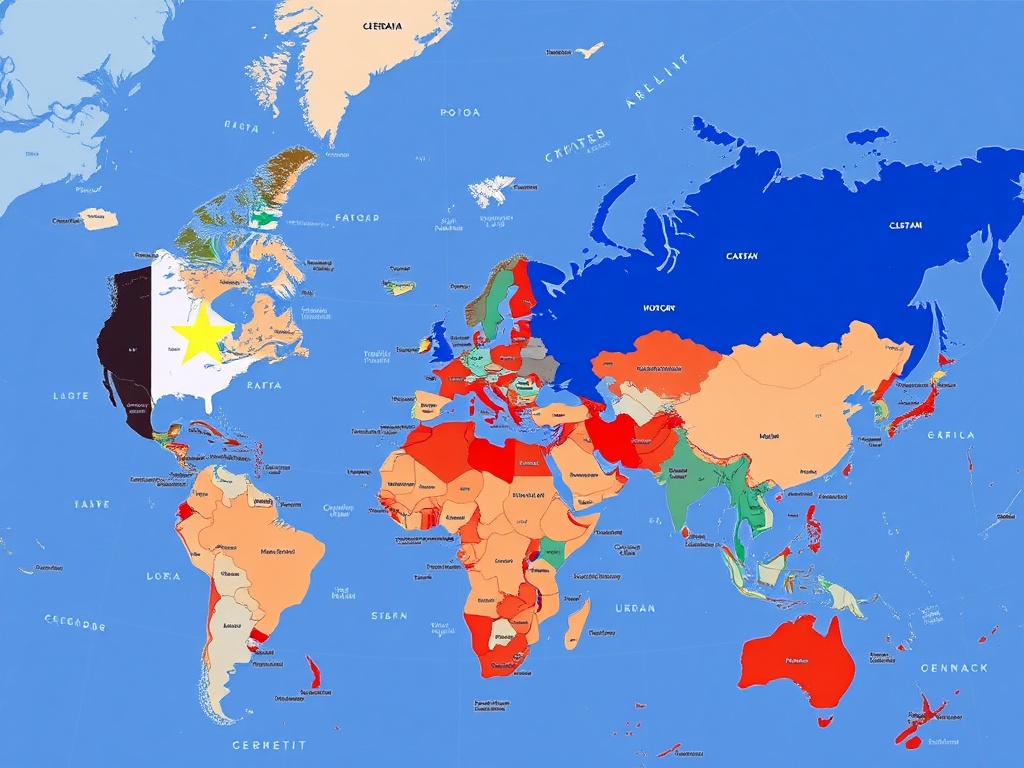
Targeted sanctions, secondary sanctions, and restrictions on access to financial systems influence corporate behavior and cross-border investment patterns.
Organizations should maintain robust sanctions-screening, monitor changes in financial connectivity, and diversify payment and financing options to reduce exposure.
Actionable steps for decision-makers
– Conduct scenario-based risk assessments that combine political, economic, and climate variables.
– Map critical dependencies across supply chains and prioritize alternatives for the most consequential nodes.
– Strengthen compliance programs to navigate evolving export controls and sanctions regimes.
– Invest in climate adaptation for critical infrastructure to reduce long-term security exposure.
– Engage in multilateral frameworks and public-private information-sharing to improve early warning and coordinated responses.
Geopolitical risk is complex, interconnected, and dynamic.
Decision-makers who integrate political, technological, and environmental intelligence into planning will be better positioned to manage disruption, seize strategic opportunities, and safeguard long-term resilience.