Geopolitical analysis is no longer a niche discipline reserved for diplomats and strategists — it’s a core business capability.
Rapid shifts in power, trade policy, and technology mean that political events can cascade into supply-chain disruptions, market volatility, and reputational risk for companies and governments alike. Understanding how to read those signals and translate them into strategic decisions is a competitive advantage.
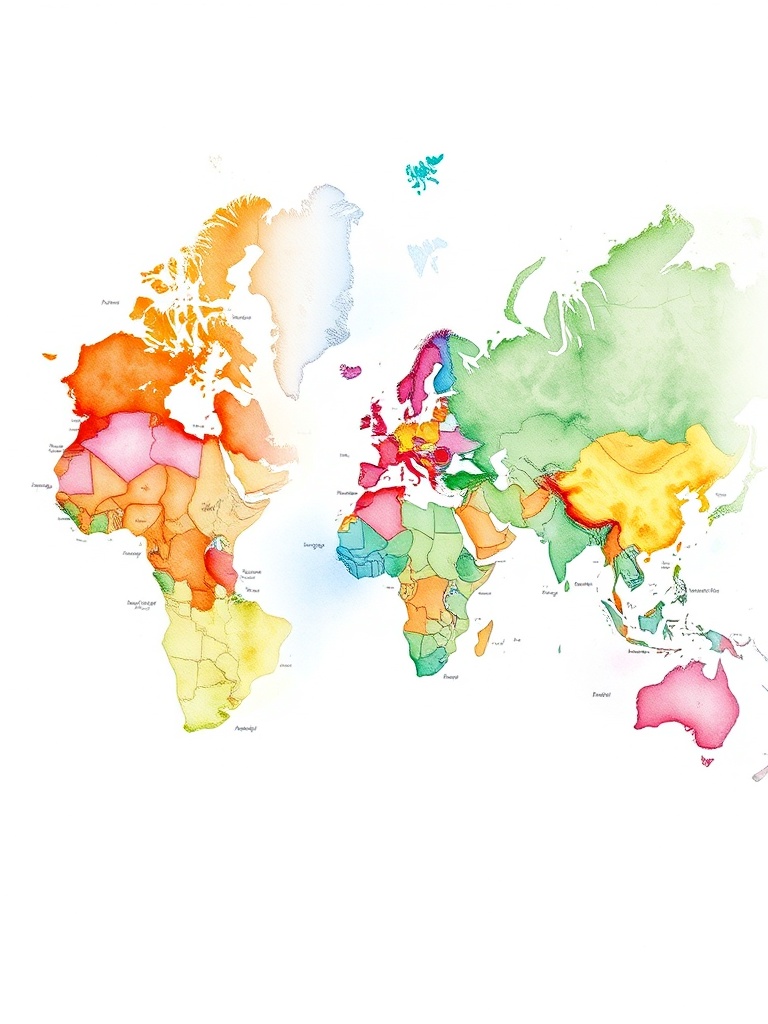
Key drivers shaping geopolitical risk
– Great-power competition: Strategic rivalry shapes trade rules, investment flows, and military postures. Competition often drives measures like export controls, investment screening, and preferential trade arrangements.
– Resource and supply vulnerabilities: Dependence on a few suppliers for critical inputs — from semiconductor components to critical minerals — raises exposure to disruption and coercion.
– Economic fragmentation: Regional blocs, tariffs, and sanctions regimes can fragment global markets and create parallel supply chains.
– Technological decoupling and standards competition: Control over advanced technologies and digital infrastructure affects market access and long-term competitiveness.
– Climate-driven instability and migration: Extreme weather and resource stress increase the likelihood of social unrest, displacement, and cross-border pressure points.
Practical framework for geopolitical analysis
1.
Horizon scanning: Systematically gather signals across political, economic, social, and technological domains. Include open-source intelligence, trade data, satellite imagery, and local reporting.
2. Risk mapping: Identify exposures by geography, supplier, and product. Map single points of failure — ports, mines, choke-points, or critical manufacturing sites.
3. Scenario planning: Build plausible scenarios (e.g., sanctions expansion, contested maritime routes, digital supply disruption) and model their impacts on operations, finance, and reputation.
4. Early-warning indicators: Track metrics such as currency pressure, flight of capital, policy announcements, social media sentiment, and movements of military assets that historically precede escalations.
5. Stress testing and contingency design: Translate scenarios into trigger points and pre-defined actions: alternate suppliers, rerouted logistics, or temporary capacity expansions.
Mitigation strategies that work
– Diversify supply chains: Reduce concentration risk by qualifying multiple suppliers across different jurisdictions and considering strategic nearshoring where feasible.
– Increase transparency: Invest in supplier mapping and real-time tracking to shorten reaction times when disruptions occur.
– Build buffers: Maintain flexible inventory policies for high-risk components, combined with financial hedges where appropriate.
– Strengthen partnerships: Cultivate local partnerships and public-private coordination to smooth regulatory navigation and crisis response.
– Policy engagement: Maintain active dialogue with policymakers and industry groups to anticipate regulatory shifts and influence pragmatic outcomes.
Why continuous monitoring matters
Geopolitical risk is dynamic; what looks stable today can flip rapidly. Embedding continuous geopolitical monitoring into corporate risk functions — with clear escalation paths and scenario rehearsal — turns uncertainty into manageable, strategic choices. Organizations that integrate political intelligence with supply-chain engineering and finance will be best positioned to protect operations and seize advantage when new alignments form.
Actionable next steps
– Conduct a rapid vulnerability audit focused on top 10 suppliers and logistics nodes.
– Establish a cross-functional geopolitical war room with triggers and playbooks.
– Invest in diversified sourcing pilots for the most critical inputs.
– Subscribe to multilingual open-source monitoring and set automated alerts for key indicators.
A disciplined approach to geopolitical analysis converts volatility into a planning input rather than a surprise, enabling resilient growth and smarter risk-taking across volatile global landscapes.