Cognitive models are structured explanations of how people perceive, think, learn, and decide. Designed to capture the mechanisms behind behavior, these models bridge psychological theory and practical design. They help translate complex human cognition into testable frameworks that improve education, interface design, decision support, and clinical assessment.
What cognitive models do
– Describe processes: They specify how information is encoded, stored, retrieved, and transformed during tasks like problem-solving, language comprehension, and memory.
– Predict behavior: They generate quantitative or qualitative predictions about performance, reaction times, error patterns, and learning trajectories.
– Guide interventions: By revealing bottlenecks and error sources, cognitive models inform targeted training, adaptive interfaces, and personalized learning pathways.
Major families of cognitive models
– Symbolic models represent thought as manipulation of discrete symbols and rules, useful for explaining deliberate, step-wise reasoning and rule-governed tasks.
– Connectionist approaches use networks of simple processing units and distributed representations to account for learning, pattern recognition, and gradual change in behavior.
– Bayesian and probabilistic models frame cognition as inference under uncertainty, explaining perception, belief updating, and decision-making with principles of rationality and optimality.
– Hybrid models combine elements from different traditions to capture both fast, intuitive processes and slow, deliberative reasoning.
Practical applications that deliver value
– Education and training: Cognitive models enable intelligent tutoring systems that adapt to learners’ strengths and weaknesses, optimizing feedback and practice schedules for durable learning.
– Human-computer interaction: Designers use cognitive models to predict workload, minimize errors, and create interfaces that align with users’ mental representations.
– Decision support: In high-stakes environments such as medicine and aviation, cognitive models identify common biases and design safeguards that reduce costly mistakes.
– Clinical assessment and rehabilitation: Modeling cognitive deficits helps tailor therapies, measure progress objectively, and predict recovery trajectories after injury or illness.
Evaluating cognitive models
Robust evaluation depends on empirical fit, generalizability, and parsimony. A strong cognitive model should account for diverse datasets, make falsifiable predictions, and balance complexity with explanatory power.
Cross-validation against new tasks and populations increases confidence in practical deployment.
Key challenges and ethical considerations
– Individual variability: People differ widely in strategy, prior knowledge, and goals. Models that ignore this heterogeneity risk poor predictions for subgroups.
– Interpretability versus complexity: Highly complex models can fit data well but may obscure the mechanisms they claim to explain. Transparency is essential when models influence real-world decisions.
– Data quality and bias: Cognitive inferences depend on representative data.
Poor sampling or biased measures can lead to models that perpetuate unfair outcomes.
– Privacy and consent: When models use personal behavioral data, ethical handling and informed consent are nonnegotiable.
Best practices for building and using cognitive models
– Start with clear theoretical assumptions and explicit hypotheses.
– Use diverse datasets for training and validation to ensure robustness.
– Prefer transparent models when they meet performance needs; use complex architectures only when justified by substantially improved explanatory or predictive power.
– Incorporate mechanisms for personalization to accommodate individual differences.
– Regularly reassess models against new evidence and evolving user contexts.
Why cognitive models matter
They transform abstract theories of mind into actionable tools that improve learning, safety, and usability.
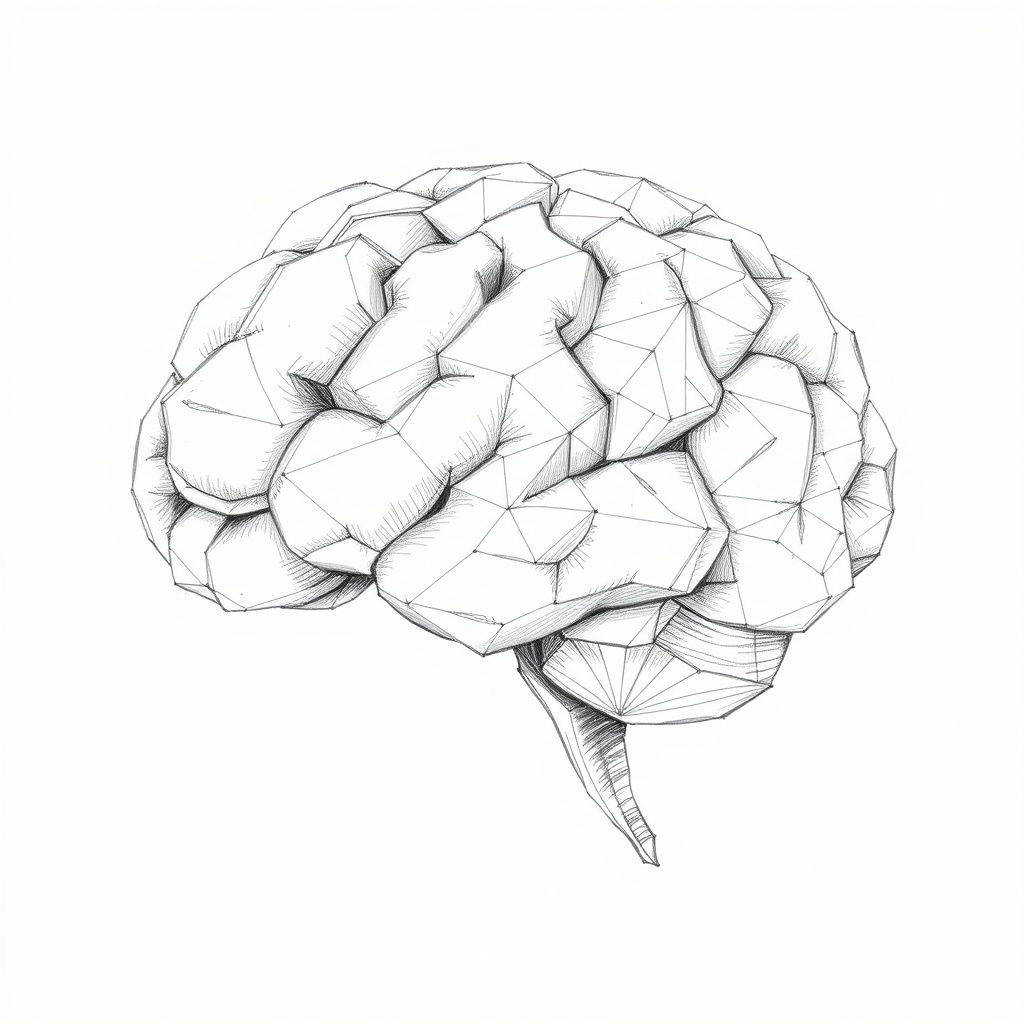
By combining principled theory with empirical validation and ethical safeguards, cognitive models can enhance systems that interact with human minds while respecting variability and dignity.
For researchers and practitioners alike, investing in rigorous, interpretable cognitive models remains one of the most effective ways to align technology and design with how people actually think.