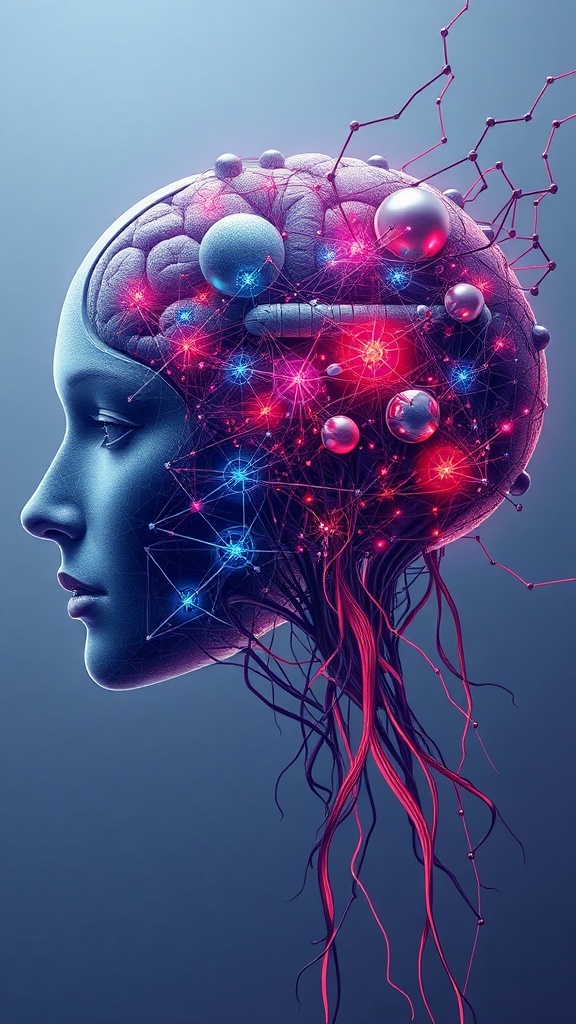
They translate psychological theory into precise, testable systems that can be applied across fields from human-computer interaction to clinical assessment.
Understanding the main types of cognitive modeling and how they’re used makes it easier to build better products, improve training, and design interventions that match real human behavior.
What cognitive models do
– Capture processes such as perception, memory, attention, reasoning, and decision making
– Produce quantitative predictions about behavior and response times
– Provide architectures for integrating multiple cognitive functions into cohesive frameworks
Common modeling approaches
– Symbolic models: Represent mental rules and structures explicitly, useful for tasks that resemble logical reasoning or rule-based problem solving. They are interpretable and align well with cognitive theories derived from experiments.
– Connectionist models: Use networks of simple units that learn patterns through weighted connections.
These models excel at explaining learning, pattern recognition, and gradual skill acquisition.
– Probabilistic/Bayesian models: Treat cognition as inference under uncertainty, formalizing how people update beliefs from evidence. They are powerful for explaining perception, causal reasoning, and decision-making under ambiguity.
– Cognitive architectures: Integrate memory, perception, and action into unified systems to simulate complex tasks and continuous behavior. Architectures support modular testing and are a common choice for applied simulations.
Practical applications
– User experience and design: Cognitive models predict error rates, attention allocation, and workload, helping designers create interfaces that reduce friction and improve usability.
– Education and training: Models of learning and retention inform adaptive tutoring systems, spacing strategies, and personalized lesson pacing.
– Decision support: Modeling human biases and heuristics enables more effective decision aids in areas like finance, healthcare, and public policy.
– Neuroscience and clinical practice: Computational models connect behavior to neural mechanisms, supporting diagnosis, treatment planning, and the study of cognitive disorders.
– Human factors and safety: Simulations of attention and fatigue contribute to safer systems in transport, manufacturing, and emergency response.
Best practices for building and using cognitive models
– Ground models in empirical data: Use behavioral experiments, reaction-time measures, and physiological data where available to constrain model parameters.
– Prioritize interpretability: For applied settings, models that offer clear, actionable explanations often outperform opaque systems that are hard to validate.
– Validate across tasks and populations: Test generalizability by evaluating models on diverse scenarios and participant groups.
– Combine approaches when helpful: Hybrid models that blend symbolic, connectionist, and probabilistic elements can capture complex cognition more effectively than any single paradigm.
Trends and opportunities
There is growing interest in linking cognitive models to richer data sources—eye-tracking, physiological sensors, and longitudinal performance records—to refine predictions and personalize interventions. Integrating cognitive models with interactive systems supports more natural, human-centered technology, from adaptive learning platforms to conversational agents that align responses with users’ reasoning styles. In clinical and organizational contexts, cognitive modeling is expanding the toolkit for precision assessment and targeted remediation.
Applying cognitive models thoughtfully improves design, training, and decision quality by making mental processes visible and actionable. Whether for research, product development, or clinical use, robust cognitive models offer a pathway from theory to real-world impact.