Used across research, product design, education, and clinical settings, cognitive models help predict behavior, test theories of mind, and guide interventions that align with how people actually think.
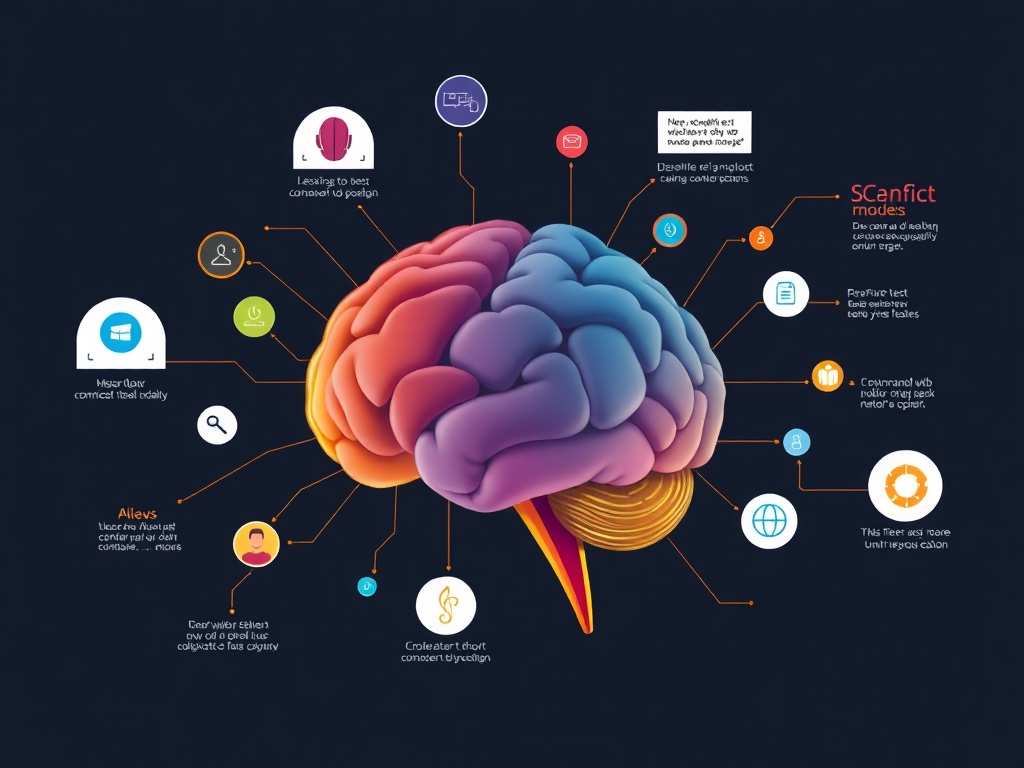
What cognitive models do
Cognitive models capture mechanisms such as attention allocation, memory encoding and retrieval, decision rules, and learning dynamics.
They can be qualitative diagrams or quantitative simulations that generate testable predictions. A robust model not only fits existing data but suggests new experiments and practical improvements—for example, how to simplify interfaces to reduce cognitive load or how to pace instruction to optimize retention.
Common families of models
– Symbolic and rule-based models: Emphasize symbolic representations and explicit rules for reasoning and problem-solving. They are often used to model step-by-step tasks and expert reasoning.
– Connectionist models: Built from networks of simple processing units, these models explain learning, pattern recognition, and generalization through distributed representations.
– Bayesian models: Treat cognition as probabilistic inference, explaining perception, learning, and decision-making as belief updating under uncertainty.
– Hybrid and architectural models: Combine strengths of different approaches to capture multiple cognitive functions in unified systems.
Cognitive architectures that integrate memory, perception, and action fall into this category.
– Embodied and situated models: Focus on cognition as grounded in sensorimotor interaction and environmental context, useful for human factors and real-world behavior.
Key principles for building useful models
– Parsimony and interpretability: Prefer simpler explanations that capture core behavior while remaining understandable to stakeholders.
– Predictive validity: Prioritize models that make accurate, falsifiable predictions, not just post-hoc fits.
– Cognitive plausibility: Align mechanisms with known neuroscience and behavioral constraints where possible.
– Iterative refinement: Use experimental data, user studies, and error analysis to refine assumptions and parameters.
Practical applications
– Product and UX design: Cognitive models inform where users struggle, which interactions cause errors, and how to reduce cognitive load through interface changes.
– Education and training: Predictive models of memory and practice spacing help design curricula and adaptive learning schedules that improve long-term retention.
– Decision support and policy: Models of judgment and bias support interventions that nudge better decisions, from risk communication to behavioral prompts.
– Clinical assessment: Computational modeling can decompose cognitive deficits into component processes, improving diagnosis and personalized treatment planning.
– Human-automation interaction: Modeling shared control and attention dynamics guides safer, more effective collaboration between humans and automated systems.
Ethical and practical considerations
Models shape decisions affecting real people; transparency about assumptions, limitations, and uncertainty is essential. Data used to fit models should be representative and collected ethically, with attention to privacy and consent.
Evaluate models across diverse populations to avoid embedding biases into tools or interventions.
Getting started with cognitive modeling
Begin by articulating the specific behavior or question to explain. Combine empirical measurement—behavioral tasks, logging, surveys—with simple baseline models.
Iterate: compare predictions against new data, refine mechanisms, and increase complexity only when it yields clear gains in explanatory or predictive power.
Cognitive models are powerful tools for understanding and improving human behavior when built with rigor, tested openly, and applied responsibly. They provide a roadmap from theory to practical change, helping designers, educators, and clinicians align solutions with how people actually think and learn.