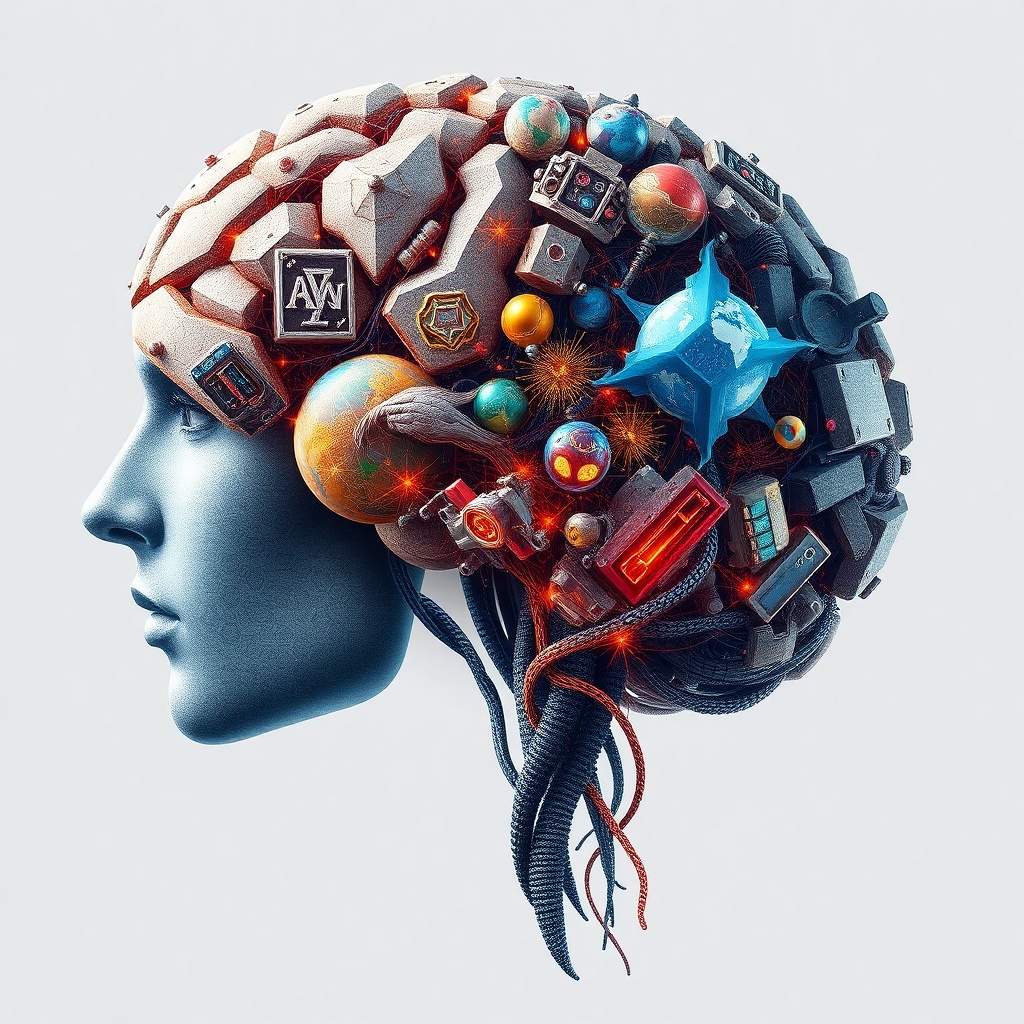
Cognitive models shape how researchers, designers, and practitioners understand thinking, decision-making, and behavior. These frameworks—from simple mental heuristics to complex computational architectures—help translate observable actions into testable explanations about attention, memory, learning, and reasoning.
What cognitive models are
Cognitive models are formal or conceptual representations of mental processes. They can be verbal descriptions, mathematical equations, simulations, or hybrid systems that link brain activity with behavior. Common categories include symbolic models (rule-based, interpretable), connectionist models (networks that learn from data), and probabilistic models (Bayesian approaches that capture uncertainty and inference).
Key paradigms driving progress
– Dual-process theories: These differentiate quick, intuitive processes from slower, deliberative thinking.
Applied to risk assessment, consumer behavior, and clinical decision-making, this paradigm clarifies when people rely on shortcuts versus systematic reasoning.
– Predictive processing and Bayesian models: Framing the brain as a hypothesis-testing organ, these approaches model perception and cognition as continuous prediction and error correction. They explain phenomena ranging from perception under uncertainty to why expectations shape experience.
– Cognitive architectures: Frameworks like ACT-R and Soar provide integrated systems for modeling attention, memory, and procedural knowledge. These architectures make it possible to simulate task performance and guide design choices in education and human-computer interaction.
Practical applications
– User experience and product design: Cognitive models inform information architecture, reducing cognitive load and improving usability.
Predictive models of attention guide layout, while models of memory inform onboarding and help systems.
– Education and training: Models of learning and memory spacing help craft curricula that enhance retention. Cognitive tutors based on detailed process models adapt feedback to the learner’s current state, improving outcomes.
– Health and clinical practice: Decision-making models support diagnostic processes, identify cognitive biases, and help personalize therapeutic interventions. Computational models of memory and attention aid in understanding disorders and measuring treatment effects.
– Policy and behavioral change: Modeling heuristics and biases supports interventions that nudge behavior—like increasing vaccine uptake or improving financial decisions—by aligning choice architecture with cognitive tendencies.
Challenges and best practices
– Ecological validity: Models often perform well in controlled tasks but struggle to generalize to messy real-world contexts. Incorporating diverse, naturalistic data improves relevance.
– Individual differences: Cognitive processes vary across people and across time. Moving from population-level models to flexible, person-centered models boosts predictive accuracy and practical utility.
– Interpretability vs. performance: Highly predictive, data-driven models can be opaque. Balancing accuracy with explainability is essential when models inform high-stakes decisions.
– Integration across levels: Bridging neural, cognitive, and behavioral descriptions remains a challenge.
Multimodal datasets and hierarchical modeling help connect brain mechanisms to observable behavior.
Practical tips for using cognitive models
– Start simple: Use lightweight models to identify key mechanisms before deploying complex simulations.
– Validate early and often: Test models against behavioral data and refine based on mismatch patterns.
– Prioritize transparency: Document assumptions, parameter choices, and limitations so stakeholders can assess applicability.
– Combine approaches: Hybrid models that blend symbolic rules and probabilistic inference often capture human behavior more faithfully than any single approach.
Cognitive models are powerful tools for explaining, predicting, and shaping behavior. When chosen and validated carefully, they improve designs, policies, and interventions by aligning systems with how people actually think and learn. Continued emphasis on real-world data, individualization, and transparent methods will keep these models useful across domains.