Geopolitical Analysis: Navigating a Fragmented, Technology-Driven World
Global geopolitics is shifting from a bipolar contest of ideas toward a more complex landscape defined by strategic competition, technology leadership, and economic interdependence. Understanding how these forces interact is essential for policymakers, businesses, and investors seeking to manage risk and seize opportunity.
Core dynamics reshaping geopolitics
– Multipolar competition: Power is distributed across a wider set of actors—states, regional blocs, multinational firms, and major cities. This diffusion makes alliances more fluid and outcomes less predictable.
– Strategic decoupling and selective interdependence: Nations aim to protect critical capabilities (like semiconductors, rare earths, and advanced manufacturing) while maintaining trade ties in less sensitive areas.
The result is a patchwork of high-trust corridors and contested domains.
– Technology as leverage: Control over emerging technologies—artificial intelligence, quantum computing, advanced telecommunications, and biotech—translates into economic and military advantage.
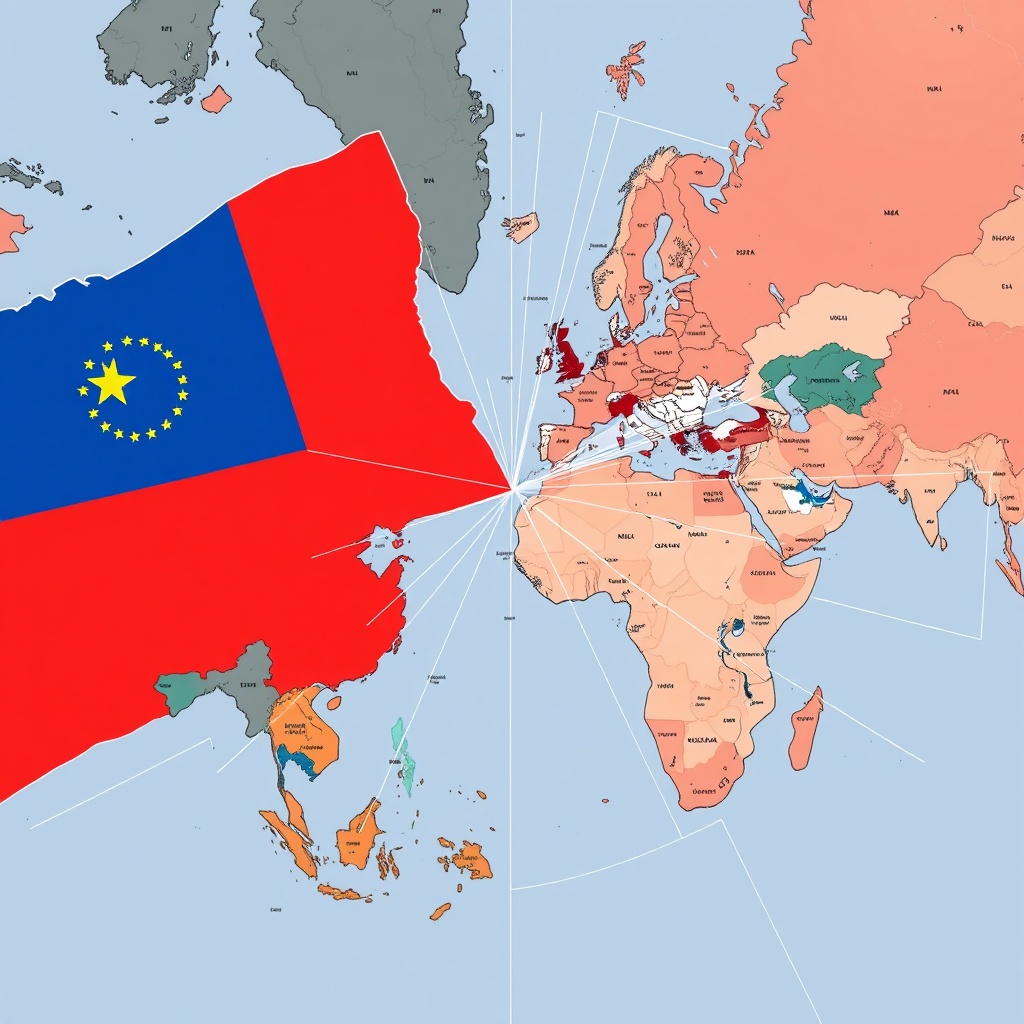
Export controls, investment screening, and talent policies are now instruments of statecraft.
– Energy transition and resource politics: Shifts away from fossil fuels toward electrification and renewables alter traditional energy alliances. New dependencies arise around battery metals, grid infrastructure, and clean-energy supply chains.
– Information environment and influence operations: Information competition, including disinformation and narrative shaping, influences domestic politics and international perceptions, prompting resilience strategies across democracies and authoritarian regimes alike.
– Climate-driven insecurity: Climate impacts are a force multiplier for instability—fueling migration, resource scarcity, and competition in regions where governance is fragile.
What this means for decision-makers
– Diversify risk, but prioritize critical resilience: Businesses should diversify suppliers and logistics while investing in redundancy for critical inputs. Governments should map critical dependencies and coordinate with industry to bolster domestic capacities where necessary.
– Invest in strategic technology ecosystems: Long-term competitiveness depends on nurturing talent pipelines, research collaboration, and secure supply chains for core technologies. Public-private partnerships can align commercial incentives with national security goals.
– Strengthen alliance networks with flexibility: Traditional alliances remain valuable, but success hinges on adaptable frameworks that include trade, intelligence sharing, and joint technology standards. Expanding partnerships with like-minded middle powers can create buffer zones of cooperation.
– Build information resilience: Countering malign influence requires media literacy, transparent communication, and partnerships with tech platforms. Democracies must balance trust in private platforms with safeguards for civil liberties.
– Account for climate and human security: Security planning should integrate climate risk assessments and invest in conflict-prevention measures, disaster preparedness, and climate-resilient infrastructure.
Key trends to watch
– Shifts in global value chains toward nearshoring and regionalization for sensitive sectors
– Intensifying competition over new resource frontiers, including seabed minerals and Arctic access
– Proliferation of export controls and investment screening regimes tied to national security
– Convergence of cyber and physical threats targeting critical infrastructure
– Emergence of alternative financial arrangements and payment systems as economic statecraft tools
Actionable steps for businesses and investors
– Conduct geopolitical risk audits focusing on suppliers, markets, and regulatory exposure
– Scenario-plan for disruptions to trade routes, energy supplies, and technology access
– Engage with policymakers to shape resilient, predictable regulatory environments
– Prioritize ESG strategies that anticipate climate and governance-related risks
Geopolitical landscapes will continue to evolve as technology, economics, and climate forces intersect. Staying informed, building flexible partnerships, and prioritizing resilience will be central to navigating uncertainty and safeguarding strategic interests.