Supply chain resilience has moved from corporate risk management to a central element of geopolitical strategy. As trade tensions, technology controls, and energy transitions deepen strategic competition, governments and firms are adapting policies that reshape where goods, data, and critical inputs move — and who controls them.
Why supply chains matter geopolitically
Supply chains are levers of influence. Access to semiconductors, advanced manufacturing equipment, critical minerals, and rare-earth inputs affects military readiness, economic competitiveness, and technological leadership. States use export controls, investment screening, tariffs, and sanctions to protect strategic industries and to pressure rivals.
Private-sector decisions about where to locate production can quickly become public-policy issues when national security is implicated.
Key trends shaping the landscape
– Strategic decoupling and friend-shoring: Rather than full economic separation, many actors pursue selective decoupling — reducing dependency on specific suppliers or technologies while maintaining broader trade ties. “Friend-shoring” redirects production to politically aligned countries or trusted partners to lower supply disruption risks.
– Tech controls and barriers: Controls on advanced chips, AI-enabling hardware, and specialized manufacturing tools aim to slow adversaries’ capabilities.
These measures accelerate efforts to develop domestic or allied alternatives and to localize sensitive production.
– Critical minerals and energy transition: Renewable energy and electric mobility depend on concentrated mineral supply chains. Securing upstream supplies, recycling capacity, and transparent sourcing has become a strategic priority.
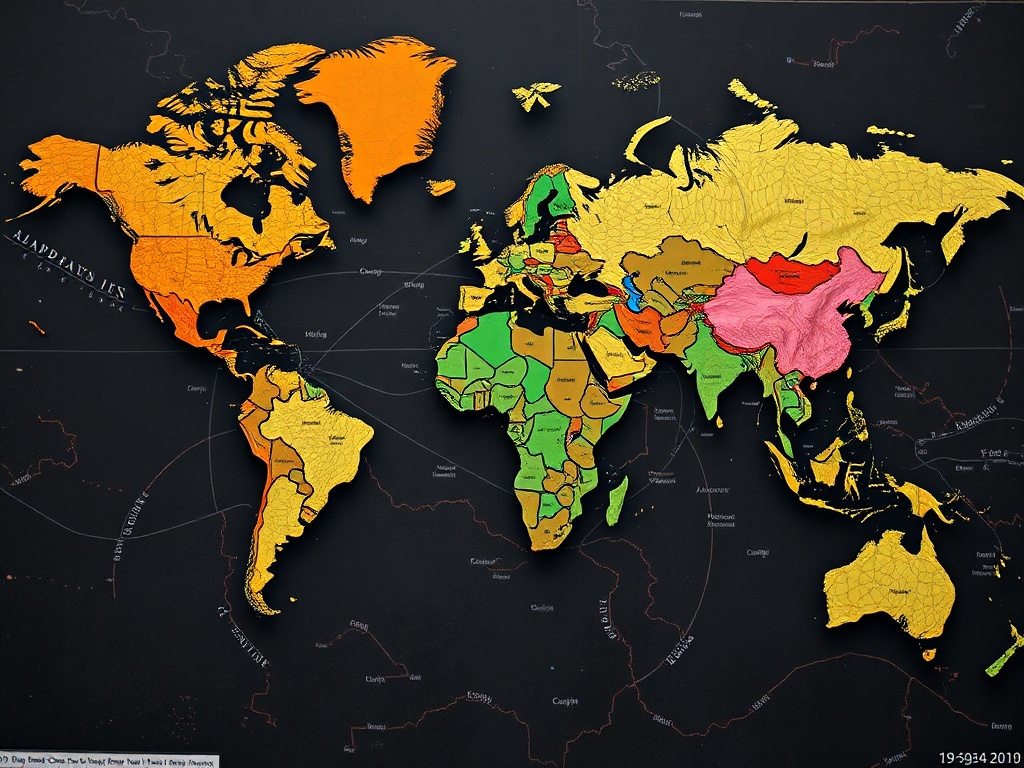
– Resilience through diversification and regionalization: Companies are shifting from single-source, low-cost models toward diversified, regional supply hubs that balance cost with reliability.
Practical steps for companies and policymakers
– Map dependencies precisely: Use supplier mapping and digital twins to identify single points of failure across tiers, not just first-tier vendors. Visibility into sub-suppliers and logistics chokepoints is essential.
– Adopt flexible sourcing strategies: Dual sourcing, regional backup suppliers, and staggered inventory approaches reduce exposure. Strategic stockpiles for truly critical components can buy time during disruptions.
– Invest in capacity and skills: Building domestic or allied capacity for high-priority sectors — from semiconductor fabs to critical-miner processing — reduces geopolitical leverage and supports strategic autonomy.
– Strengthen multilateral frameworks: Cooperative approaches to export-control coordination, critical-mineral trade, and standards for secure supply chains reduce the risk of fragmentation and costly tit-for-tat restrictions.
– Leverage public-private partnerships: Governments can de-risk private investment through incentives, loan guarantees, and co-funded R&D to establish resilient supply nodes where market signals alone are insufficient.
– Prioritize transparency and sustainability: Environmental, social, and governance (ESG) practices now intersect with geopolitical risk. Traceability and responsible sourcing mitigate reputational and regulatory risks while diversifying supplier bases.
What to expect next
Strategic competition over supply chains will remain a defining feature of global geopolitics. Technology controls and competition for critical inputs will prompt further regionalization and closer alignment among like-minded partners. Firms that blend cost discipline with geopolitical-aware risk management — emphasizing visibility, diversification, and adaptability — will be better positioned to navigate heightened uncertainty.
Ultimately, resilience is not about eliminating risk entirely but about designing supply chains that can withstand shocks, adapt to shifting policies, and sustain operations under geopolitical stress.
Organizations that treat supply chains as strategic assets will gain both stability and competitive advantage as global dynamics evolve.