Geopolitical Analysis: The Semiconductor Supply Chain and Global Power
The contest over advanced technology is one of the clearest expressions of contemporary geopolitical competition.
Semiconductors sit at the heart of that struggle: they power everything from consumer electronics to military systems, and their production requires complex, concentrated supply chains.
Understanding how semiconductor geopolitics shapes global power helps businesses and policymakers manage risk and seize strategic opportunities.
Why semiconductors matter geopolitically
Semiconductors are dual-use goods with outsized strategic value. Cutting-edge chips enable artificial intelligence, advanced communications, and precision weapons, making them central to national security and economic competitiveness.
Because leading-edge fabrication and specialized equipment are concentrated in a few locations, supply disruptions can cascade across industries and borders, creating leverage for states that control critical nodes.
Key strategic fault lines
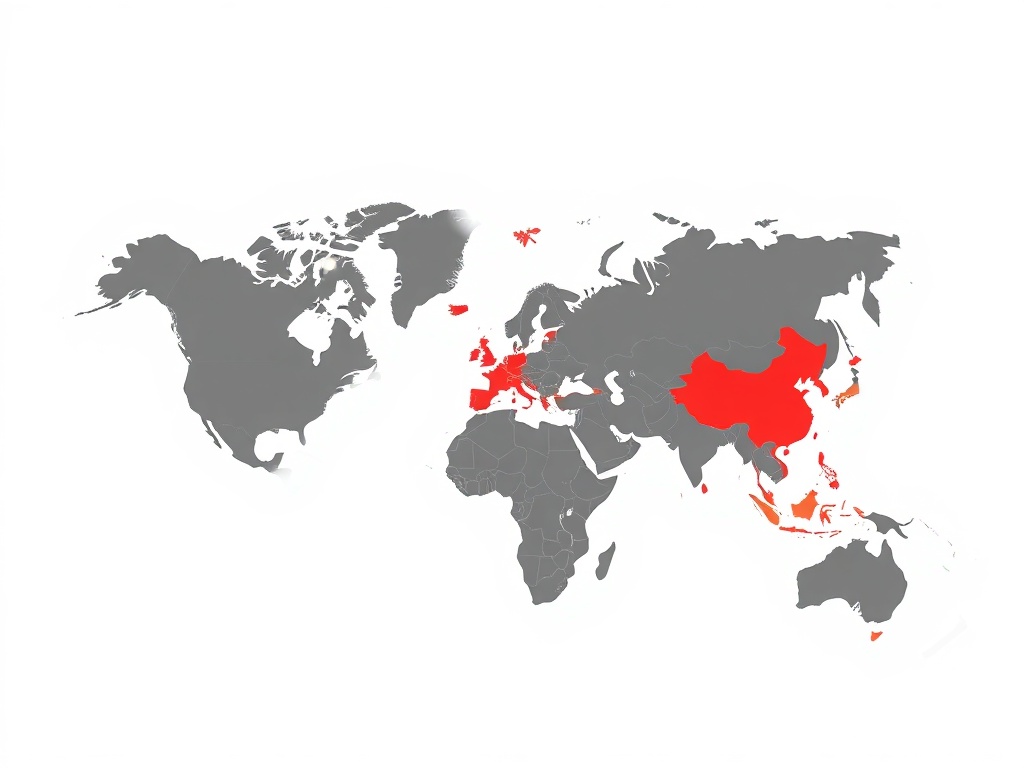
– Geographic concentration: A handful of foundries and materials suppliers dominate advanced chip manufacturing. This concentration creates chokepoints that competitors or natural events can exploit to cause widespread disruption.
– Export controls and investment screening: States increasingly use export controls and foreign investment rules to restrict access to key technologies. These tools reshape global collaboration, redirect supply chains, and raise the political cost of technological dependence.
– Industrial policy and reshoring: Governments are investing in domestic production and alliances to reduce vulnerability. Subsidies, tax incentives, and public-private partnerships aim to build resilience but also drive competition for talent and capital.
– Talent and intellectual property: Advanced chip design and manufacturing depend on specialized human capital and protected know-how. Restrictions on people flows, academic collaboration, and IP transfers become leverage points in geopolitical competition.
Strategic responses and market signals
Businesses and governments are adopting multiple strategies to manage risk:
– Diversification and friend-shoring: Companies are spreading production across multiple jurisdictions, prioritizing politically aligned partners to mitigate geopolitical risk while balancing cost and efficiency.
– Inventory management and design adaptation: Firms hold strategic inventories, redesign products to use more readily available components, and plan product life cycles with potential shortages in mind.
– Supply chain transparency: Greater visibility across tiers helps identify dependencies on specific suppliers or regions, enabling targeted mitigation.
– Collaboration with allies: Strategic partnerships for research, co-investment in fabs, and harmonized standards help build more secure technology ecosystems without full decoupling.
Risks and unintended consequences
Efforts to secure chip supply chains can generate new tensions. Subsidy races may distort markets and create excess capacity in certain segments while leaving others vulnerable. Export controls can spur domestic tech development in targeted states, accelerating strategic autonomy. Fragmentation of standards and platforms raises costs for multinational companies and feeds geopolitical competition into commercial markets.
What to watch for
– Shifts in production geography as firms evaluate political and climate risks
– New layers of regulatory restriction affecting technology transfer and talent mobility
– Public-private initiatives aimed at critical-material recycling and alternative supply routes
– Cross-border cooperation on semiconductor-related standards, which can either bridge or deepen divides
Practical takeaways
– Map second- and third-tier suppliers to uncover hidden chokepoints.
– Stress-test procurement and product plans against multiple disruption scenarios.
– Prioritize partnerships in politically aligned markets while maintaining commercial flexibility.
– Invest in workforce development and IP protection as strategic assets.
Semiconductor geopolitics is not just a tech story — it reshapes industrial strategies, alliance structures, and national security priorities.
Organizations that anticipate supply-chain stress, pursue pragmatic diversification, and engage constructively with allies will be better positioned to navigate the evolving landscape.