Cognitive models explain how people perceive, learn, decide, and act. Rooted in psychology and neuroscience, these frameworks translate observable behavior into testable mechanisms—working memory limits, attention allocation, evidence accumulation in decisions, and pattern recognition. Understanding cognitive models helps researchers, designers, and practitioners predict behavior, reduce error, and create experiences that match how people actually think.
Key approaches
– Symbolic models: Emphasize rule-based processing and explicit representations, useful for tasks that involve logical reasoning or step-by-step problem solving.
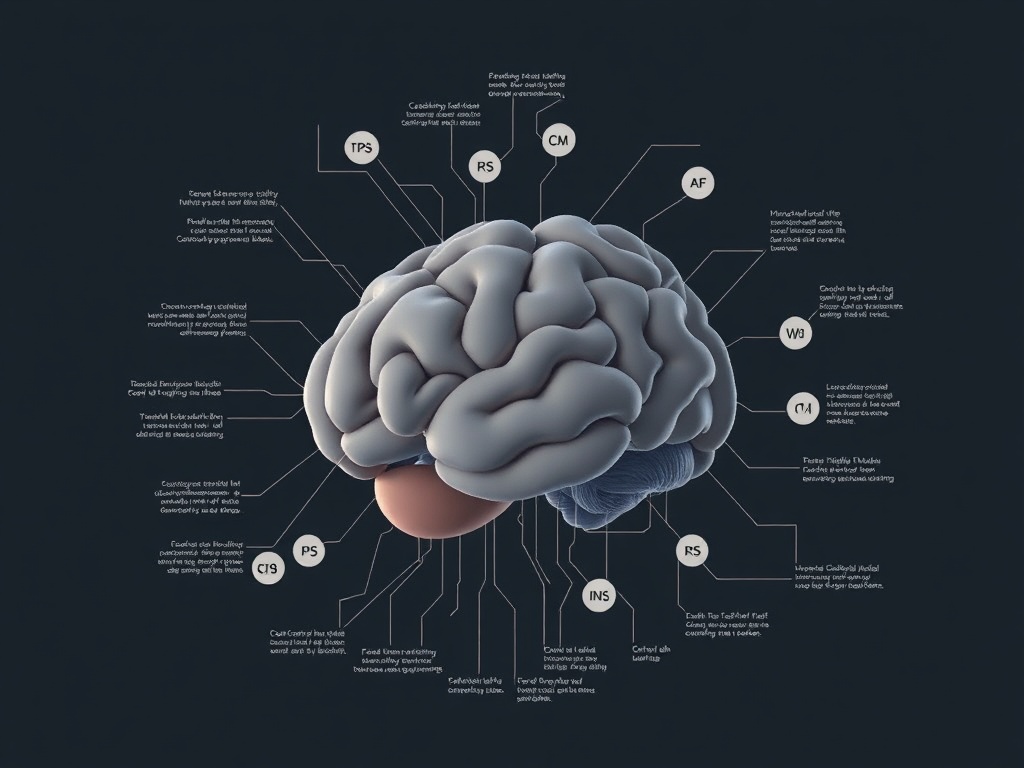
– Connectionist approaches: Use networks of simple units to capture learning and pattern extraction, providing insights into perception and associative memory.
– Probabilistic and Bayesian models: Treat cognition as statistical inference, explaining how people integrate uncertain information and form expectations.
– Hybrid architectures: Combine symbolic structure with subsymbolic learning to balance interpretability and flexibility.
A particularly influential perspective casts perception and cognition as predictive processing: the brain constantly generates expectations and updates them based on sensory input. This viewpoint links attention, learning, and surprise, and offers practical predictions about when people will notice errors or change behavior.
Practical applications
– Product and UX design: Cognitive models guide interface complexity, reduce cognitive load, and shape information flow so users can complete goals with fewer errors. Predictive models of attention and memory suggest where to place key controls and how much information to display at once.
– Education and training: Models of learning and forgetting inform spacing, interleaving, and feedback schedules that improve retention and transfer.
Adaptive learning systems that incorporate cognitive principles can personalize practice pacing and difficulty.
– Human factors and safety: Modeling decision thresholds and workload helps design cockpit displays, control rooms, and medical interfaces to minimize critical mistakes under pressure.
– Behavioral prediction and policy: Cognitive frameworks improve forecasting of consumer choices, health behaviors, and responses to interventions by highlighting biases, heuristics, and contextual influences.
– Clinical assessment: Computational characterizations of attention, memory, or decision processes aid diagnosis and track treatment effects for cognitive disorders.
Validation and challenges
Robust cognitive models require rigorous testing against behavioral data and, when relevant, neural measures.
Cross-validation, out-of-sample prediction, and parameter recovery tests reduce the risk of overfitting. Major challenges include accounting for individual differences, balancing model complexity with interpretability, and ensuring that model predictions generalize beyond lab tasks to real-world settings.
Best practices for practitioners
– Start with clear behavioral predictions: Define what the model should explain and how to measure it.
– Use mixed-methods validation: Combine quantitative fits with qualitative checks and task realism.
– Prioritize parsimony: Prefer simpler explanations that capture core behavior before adding complexity.
– Integrate early with design: Apply cognitive insights during concept development to shape user flows and testing strategies.
– Monitor generalization: Test models across different populations, tasks, and environments to avoid narrow applicability.
Why it matters
Cognitive models bridge theory and practice, turning abstract ideas about mind and brain into concrete design principles and diagnostic tools.
As methods for measuring behavior and brain activity become more accessible, applying cognitive models responsibly offers stronger predictions, better user experiences, and more effective interventions. For anyone building products, policies, or therapies that involve people, grounding decisions in cognitive theory increases the chance of getting behavior—and outcomes—right.