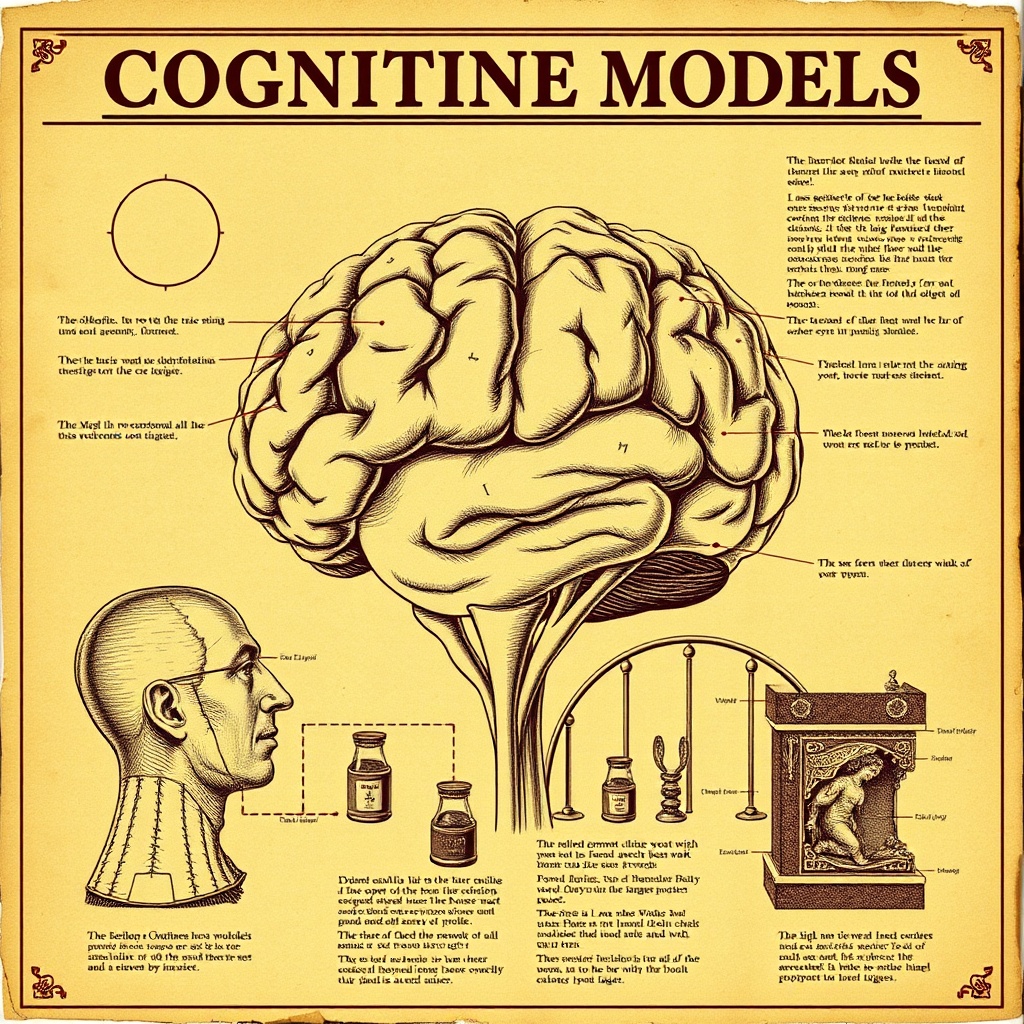
Cognitive models translate theories about human thought into explicit, testable systems. They capture how people perceive, learn, reason, decide, and act, combining psychological theory with computational methods to predict behavior.
Well-constructed cognitive models improve understanding of complex tasks, support better interfaces and learning systems, and guide interventions in health and education.
Core types of cognitive models
– Symbolic models: Represent knowledge and processes with rules or symbolic structures.
Good for tasks that involve explicit reasoning, language rules, or step-by-step problem solving.
– Connectionist networks: Often called neural networks in psychological contexts, these emphasize distributed representations and gradual learning from experience. They excel at pattern recognition and the emergence of cognitive phenomena from interacting units.
– Bayesian models: Use probability and inference to formalize how people update beliefs given new evidence. Useful for perception, causal reasoning, and decision-making under uncertainty.
– Hybrid architectures: Combine symbolic structure with connectionist learning or probabilistic inference to capture both rule-based reasoning and flexible adaptation.
How cognitive models are built and validated
– Formalization: Translate verbal theory into equations, algorithms, or flow architectures. Clear assumptions are essential for testable predictions.
– Data fitting: Fit model parameters to behavioral measures such as response times, error patterns, eye movements, or choices. Goodness-of-fit metrics and cross-validation guard against overfitting.
– Model comparison: Use information criteria or predictive accuracy to compare competing models. The goal is not only to fit data but to explain why one model outperforms another.
– Neurobehavioral alignment: When available, align model states with neuroimaging or electrophysiological signals to strengthen biological plausibility.
– Robustness checks: Perform parameter recovery, sensitivity analyses, and simulate out-of-sample conditions to test generality.
Practical applications
– Human-computer interaction: Cognitive models guide interface design by predicting cognitive load, response times, and error likelihood for different layouts and interaction flows.
– Education and training: Modeling learning curves and misconceptions enables adaptive tutoring systems that target the right content at the right time.
– Decision support: Models of judgment and choice can improve decision aids in domains like finance, healthcare, and safety-critical operations.
– Clinical assessment: Computational accounts of memory, attention, or reward processing help characterize cognitive symptoms and personalize interventions.
Common challenges and pitfalls
– Interpretability vs.
performance: Highly flexible models can fit data well but lack interpretability; parsimonious models offer clearer insight but may miss subtleties.
– Individual differences: Group-level fits can obscure meaningful variation across individuals. Hierarchical modeling and personalized parameter estimation help address this.
– Data quality: Cognitive models depend on precise measurements. Noisy or sparse data can lead to misleading inferences.
– Overfitting and misuse: Strong fits on one task don’t guarantee generalization. Transparent reporting of methodologies and replication strengthen claims.
Best practices
– Make assumptions explicit and publish model code for reproducibility.
– Use multiple data sources (behavioral, physiological, contextual) for convergent validation.
– Compare competing models systematically rather than relying on a single favored approach.
– Emphasize predictive performance on novel datasets when possible.
Looking ahead
Efforts to integrate richer behavioral datasets, personalized parameters, and mechanisms that bridge cognition and brain function promise more useful, actionable models. The most impactful cognitive models will balance explanatory clarity with predictive utility, guiding design choices in technology, education, and healthcare while deepening understanding of human thought.