Cognitive Models: How They Explain Thought, Predict Behavior, and Guide Practice
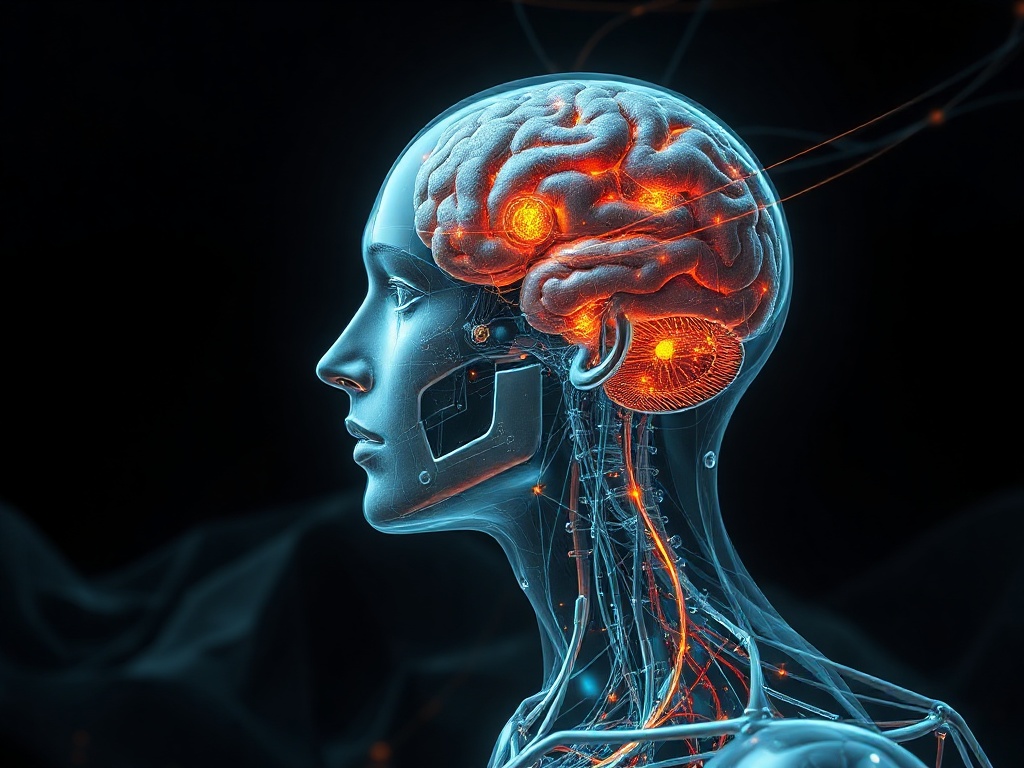
Cognitive models are formal descriptions of how mental processes operate: how people perceive, remember, decide, and act. They range from high-level theories that map cognitive stages to detailed computational implementations that simulate observable behavior.
Today, these models bridge laboratory insight and real-world application by turning abstract ideas into testable predictions.
Core types of cognitive models
– Symbolic models: Represent cognition as rule-based manipulation of symbols and explicit knowledge structures. They excel at explaining reasoning, language parsing, and tasks where clear rules govern behavior.
– Connectionist models: Inspired by networks of simple processing units, these models capture learning and pattern recognition through distributed representations.
They are useful for explaining perceptual learning, graded responses, and generalization.
– Bayesian models: Frame cognition as probabilistic inference. These models describe how people integrate uncertain information and update beliefs, offering powerful explanations for perception, decision-making, and causal reasoning.
– Predictive processing models: Propose that the brain continuously generates predictions and minimizes the mismatch between expectation and sensory input.
This framework connects perception, attention, and learning under a single principle.
Why cognitive models matter
Cognitive models do more than describe—they predict. A strong model can forecast how a person will perform under novel conditions, identify which task features drive errors, and suggest interventions to improve performance. That predictive power makes cognitive models valuable across domains from education and usability design to clinical assessment and training.
Practical applications
– Education: Models of working memory and learning inform instructional design, spacing of practice, and problem sequencing to boost retention and transfer.
– Clinical assessment: Computational models can make cognitive deficits transparent, helping differentiate conditions that produce similar symptoms and tailoring rehabilitation strategies.
– Human-computer interaction: Understanding cognitive load and attention through formal models guides interface design that reduces errors and increases efficiency.
– Decision support and policy: Models of judgment and choice reveal common biases and suggest debiasing techniques for high-stakes environments.
Building and evaluating models
Robust cognitive modeling follows clear hypotheses, rigorous data collection, and transparent validation. Key practices include:
– Fit and prediction: Assess both how well a model explains existing data and how well it predicts new data or behavior in altered tasks.
– Parsimony vs. fidelity: Balance simplicity (interpretability) with the ability to capture nuanced behavior.
– Cross-validation and out-of-sample testing: Guard against overfitting by testing models on independent datasets or different task variants.
– Integration with neural data: Combining behavioral models with brain measures strengthens inference about underlying mechanisms but requires careful linking assumptions.
Challenges and best practices
Cognitive models often face tradeoffs between interpretability and complexity.
Rich models can mimic behavior closely but become hard to interpret, while simple models may miss critical dynamics. Address this by explicitly stating model goals, using model comparison techniques, and sharing code and data to support reproducibility.
Accounting for individual differences is increasingly important—population-level fits can obscure meaningful variability that matters for personalized interventions.
Emerging directions
Modeling is moving toward multimodal, mechanistic accounts that link perception, action, and context. There’s growing emphasis on transparent, reproducible workflows and on tools that make modeling accessible to researchers and practitioners. By combining principled theory with rigorous validation, cognitive models remain essential tools for understanding mind and behavior and for designing interventions that work in everyday settings.