Cognitive models are formal tools that describe how minds perceive, reason, learn, and decide. They translate hypotheses about mental processes into mathematical, computational, or symbolic systems that can be tested against data.
Whether used to explain reaction times in a lab task, predict human choices online, or design more natural human-computer interfaces, cognitive models are central to understanding and engineering intelligent behavior.
Types of cognitive models
– Symbolic models: Represent cognition with discrete symbols and rules, well suited to tasks that resemble logical reasoning, language parsing, and structured problem solving. They often make process-level predictions about the sequence of mental operations.
– Connectionist models: Also called neural network models, these capture cognition through distributed representations and weighted connections. They excel at pattern recognition and learning from data and can model graded, noisy behavior that resembles human performance.
– Bayesian models: Frame cognition as probabilistic inference under uncertainty. They explain perception, concept learning, and decision making by positing optimal or approximate updates of beliefs given evidence.
– Hybrid and cognitive architecture approaches: Combine strengths from multiple paradigms—such as symbolic reasoning guided by neural learning or Bayesian priors embedded within connectionist frameworks—to better match complex human behavior across tasks.
Building and validating models
Strong cognitive modeling follows a cycle: formulate hypotheses, implement the model, fit it to empirical data, and evaluate predictive power. Key practices include:
– Fit models to individual-level and group-level data to capture both idiosyncrasies and shared structure.
– Use cross-validation and out-of-sample prediction to avoid overfitting.
– Compare models on predictive metrics (e.g., likelihood, information criteria) and on qualitative fits to behavioral patterns.
– Test parameter recovery and perform model simulations to ensure interpretability and robustness.
– Integrate multi-modal data (behavioral, eye-tracking, neural recordings) for stronger constraints and richer validation.
Applications across domains
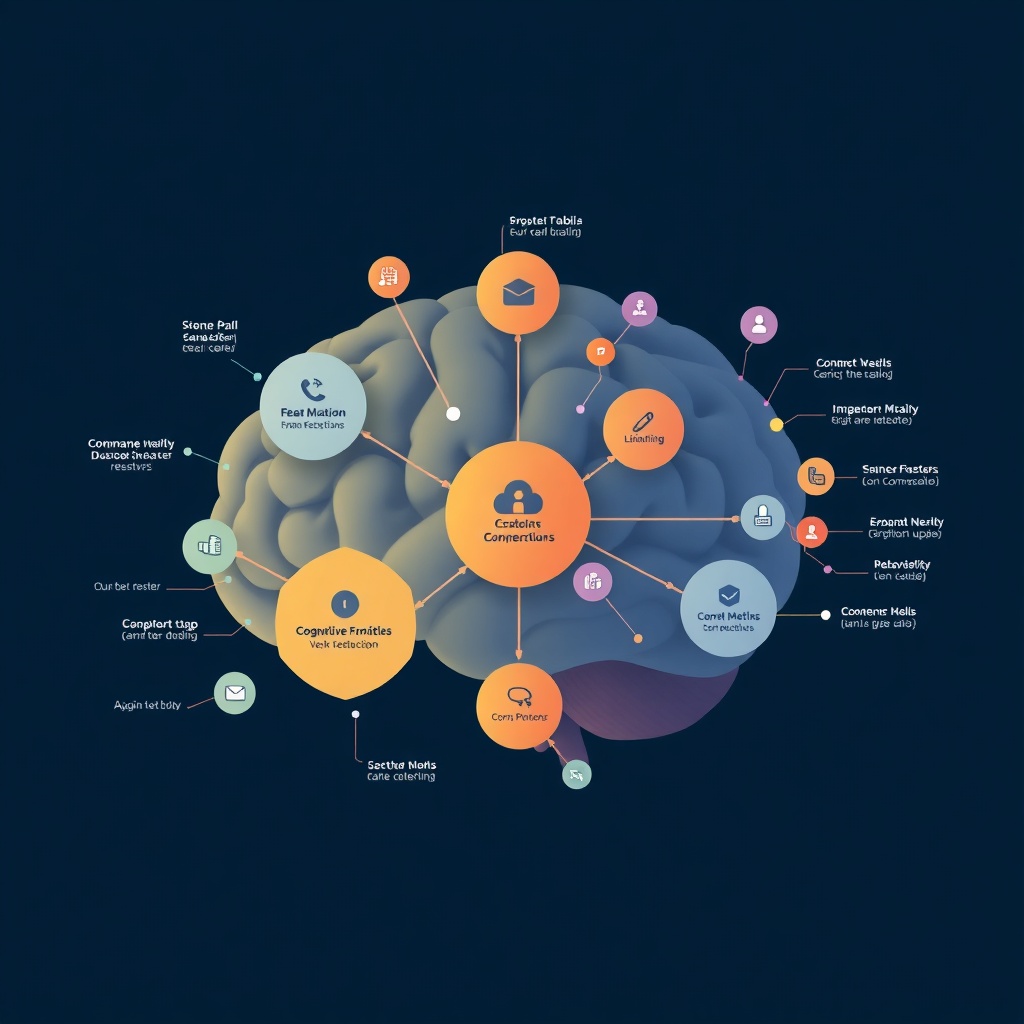
Cognitive models inform many areas where human behavior intersects with technology and policy. In human-computer interaction, they guide adaptive interfaces that anticipate user goals. In education, models of learning and forgetting help personalize practice schedules and optimize curricula. In clinical psychology, cognitive models clarify mechanisms behind disorders and suggest targeted interventions. In AI, human-inspired models improve explainability and align machine learning with human expectations.
Current challenges
– Interpretability vs.
performance: High-performing models, especially large neural networks, can be opaque. Balancing predictive accuracy with mechanistic insight remains a core tension.
– Generalization: Models that fit specific datasets may fail to generalize across tasks, contexts, or populations.
Building models that capture flexible, transferable cognition is an active pursuit.
– Bridging levels: Linking algorithmic descriptions with neural implementation and behavior is complex. Effective models should respect constraints at multiple levels of analysis.
– Ethical and societal considerations: Models that predict or influence human decisions raise privacy, fairness, and consent concerns. Transparent reporting and responsible deployment are essential.
Practical guidance for researchers and practitioners
Start with a minimal model that addresses the core hypothesis, then increase complexity only when it substantially improves prediction or explanatory power. Prefer models that make testable, falsifiable predictions.
Share code and data to accelerate replication and cumulative progress.
Consider hybrid approaches when single-paradigm models fail to capture the richness of human behavior.
Ongoing developments continue to refine how cognitive models explain mind and behavior, with cross-disciplinary collaborations increasingly important. As methods and datasets evolve, models that balance accuracy, interpretability, and ethical deployment will be most useful for both science and real-world applications.